
Balance First. Then Move.

Among my executive coaching clients, I’m hard pressed to find someone who doesn’t have a goal to find more balance in their lives.
The state of being out of balance is likely familiar. It can cause us to lash out from small irritations or spiral when work or life feel overwhelming. We might find emotions bubble to the surface more easily than expected, or exhaustion set in when we’re used to having more in the tank.
Rather than the quest for perfect balance, I’m fonder of the term work-life integration. It reflects a gentle folding of different parts of our lives, incorporating responsibilities with passion and rest. It signals that it’s okay to have intense peak periods of work while integrating breaks to recharge, respecting the creative flow.
Too often though, the teeter-totter of our daily lives gives way to chaos, uncertainty, and discord. There’s tension. We find ourselves wrapped up in expectations or fear of the unknown. We worry or obsess over things that may likely never happen, yet still they claim space in our consciousness, robbing us of calm, serenity, and creative energy.
Balance, though alluring, is temporary. Even after finding a moment when things feel evenly distributed, balance must give way toward shifting our weight to a state of imbalance to move forward.
I’ve come to understand this most clearly through the body — specifically, through years of training as a dancer.
In ballet, we learn that balance must come first before we move. When we’re balanced, our skeletal structure is aligned and stacked, muscles are engaged, energy is rooting us into the ground with a counter energy lengthening and pulling us up. Only then do we discover true freedom to move in any direction.
The same applies to the rhythm of our lives. We can work on the pursuit of our dreams and goals, sketching out how we’d like life to be. But until we get grounded in today, balanced, and in harmony, we struggle to find a sustained momentum to move us in the direction we want to go.
Balance isn’t a destination — it’s a practice. To encourage more of it in your life, consider a few of the following techniques:
Start by getting centered. Before the chaos of the week begins (either the Friday afternoon before or over the weekend), carve out 5-10 minutes to list your top 3 ‘Big Rock’ priorities. The little pebbles and sand will fill in the rest of your time, but anchor yourself to the big three things you want to accomplish that week.
Ritualize the transitions. When moving from work to home life, mark the shift with a short walk around the block. Set your movement to your favorite playlist. Create a ritual to move from the intensity of work to being present for those at home.
Decide on your non-negotiables. It might be a gym class you won’t miss or sitting down for dinner with your family by a certain time. Pick something that grounds you each week. Protect that time at all costs.
Create a reward. Plan ahead to have something to look forward to. It could be a dinner out with friends, a weekend getaway, or a visit to your cousin’s art show. Aim to have something on the books at least every quarter that lights you up in an unexpected way.
Make space for weekly Creativity Boosters. These can be light lifts: a secret word-of-the-week for your team to incorporate, 20 minutes of quiet time with your adult coloring book, or dancing to a favorite song before you head out the door. Expressing yourself in a new and creative way will encourage new neural connections while shifting your perspective.
None of these require an overhaul. They require deliberate attention.
The same principle showed up somewhere I didn’t expect: my new office space. It revealed how out of balance I was with my previous set up. Decluttering is calming. The mere act of clearing the space revealed what I truly needed — points of focus and clarity to work at my best. The rest was just noise.
Finally, give yourself a little grace. Some days the triple pirouettes are effortless; other times I wobble. What I’ve learned is that the wobble isn’t a failure of balance — it’s balance in motion, correcting itself in real time.
The more I focus on less (striving less, doing less, breathing, letting go, anchoring to clear objectives), the more I’m able to accomplish. Balance was never about holding still. It’s about finding your center quickly enough to move again.
Get grounded. Then go.
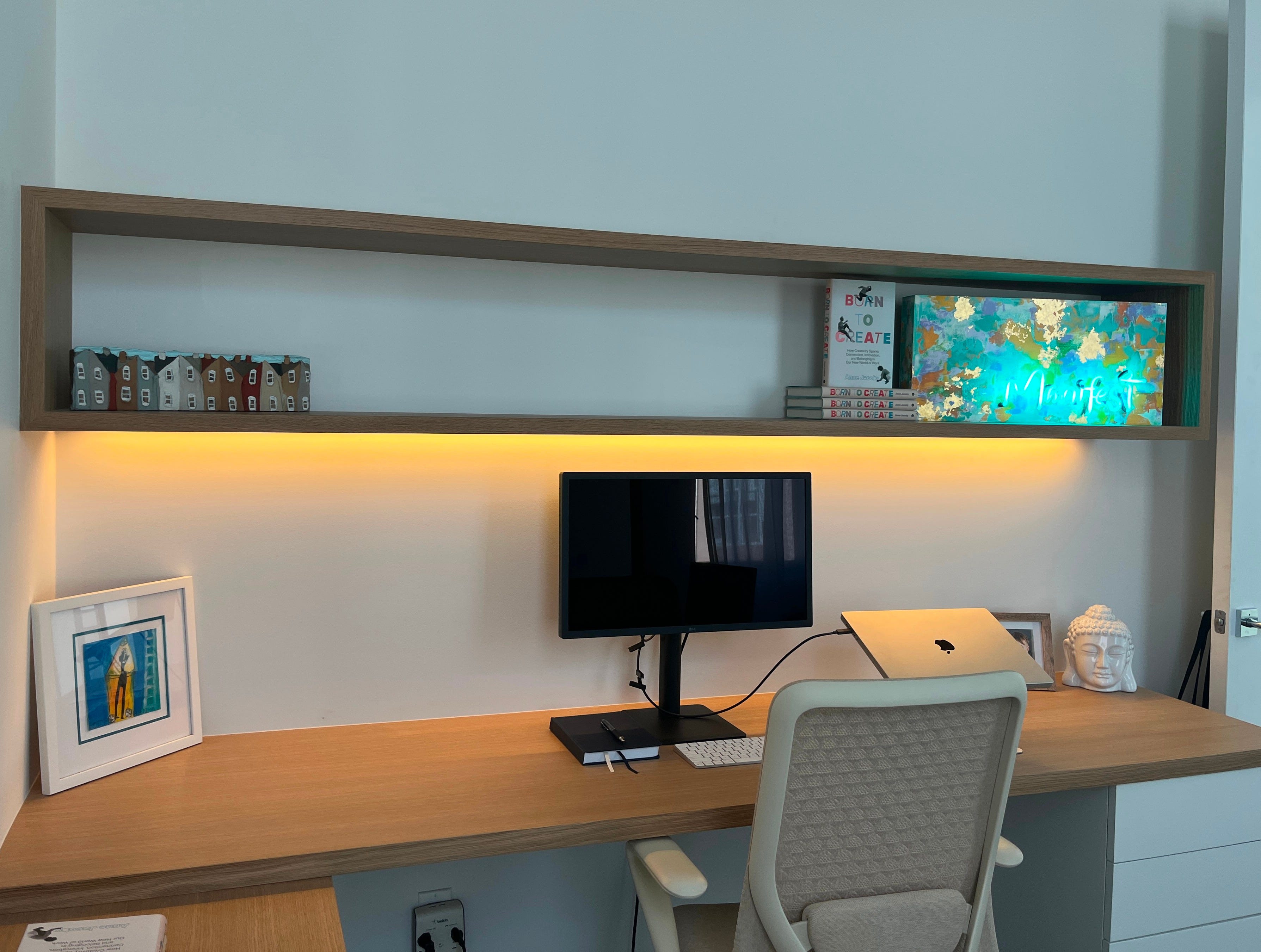
My new custom home office space, sans clutter. Still in the process of nesting.
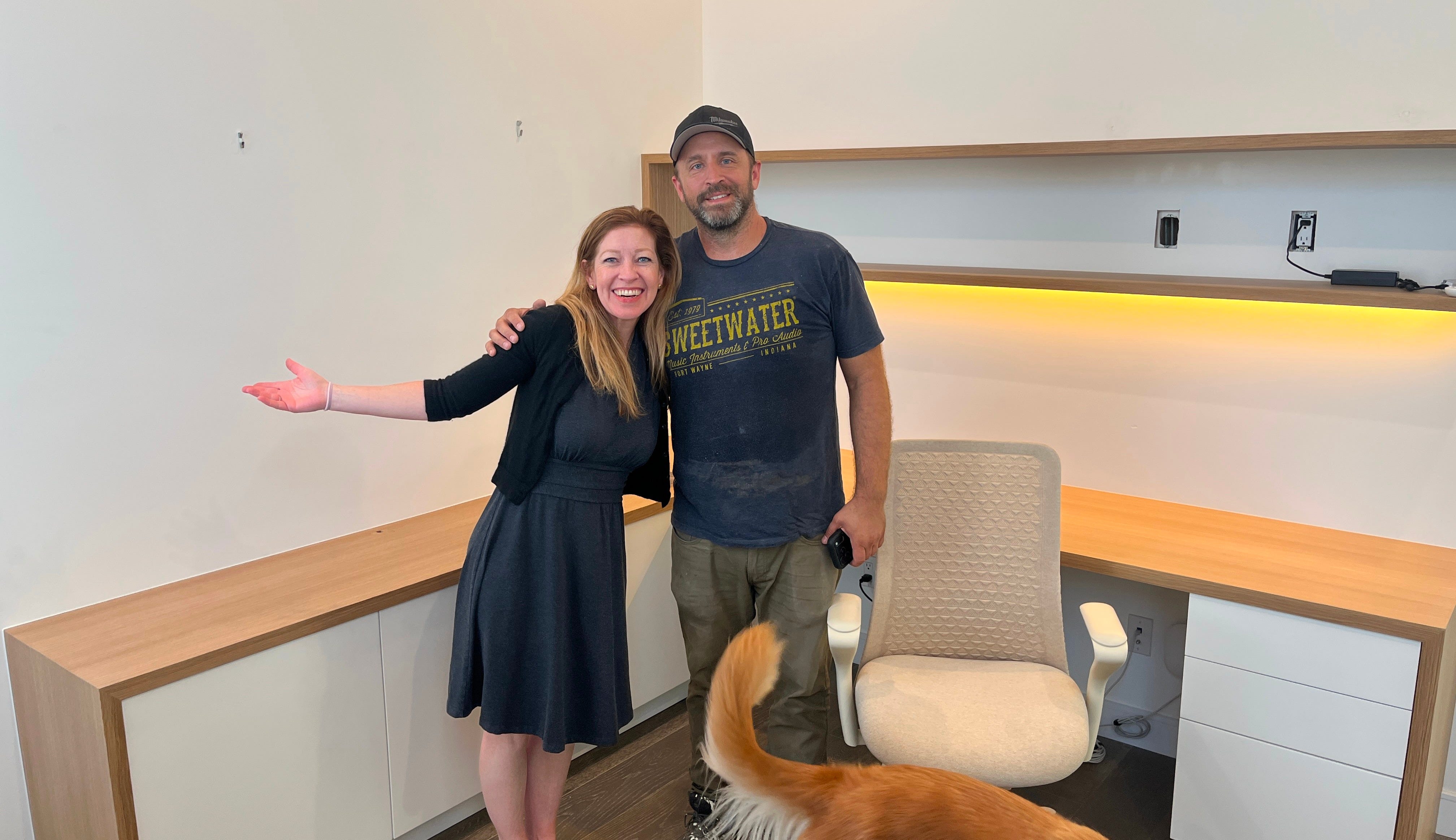
My friend Aaron Hauser (the talented craftsman builder and owner of Mason Hauser Cabinets) and me. Cameo by Daisy!
A Lucky Dozen
My daughter turned a magical 12 years old this week. Still my little bird, even as her world gets bigger — she’s clever, funny, and a treat to be around.
I clearly remember being twelve. It was a leap forward in independence, deep thinking, and taking on responsibilities. It was the same year I met one of my closest friends, my ride-or-die. We exchanged shoeboxes full of letters back and forth across our middle and high school years.
Last week my middle school Language Arts teacher reached out to me after decades out of touch. Her email transported me to our classroom: a room in a single story craftsman in Los Olivos, California. We read Animal Farm and 1984, poetry and Shakespeare, content all likely over my head yet fuel to stretch my thinking in new and wonderful ways.
It was in that room that I first learned to write for myself, not just for a grade. Every other week we turned in letters to her about our lives: our Dear Dorothy assignments. It memorialized the drama of those years — the crushes, academic pressures, uncertainties, and emerging interests.
As my daughter starts her year as a 12-year-old, my wish will be for her to discover the art of letter writing, a way of tracing her highs and lows on a clean sheet of paper. No prompts. No audience. Just her, a blank page, and whatever she’s carrying that week. It’s the kind of self-reflection that might just stick with her for a lifetime.
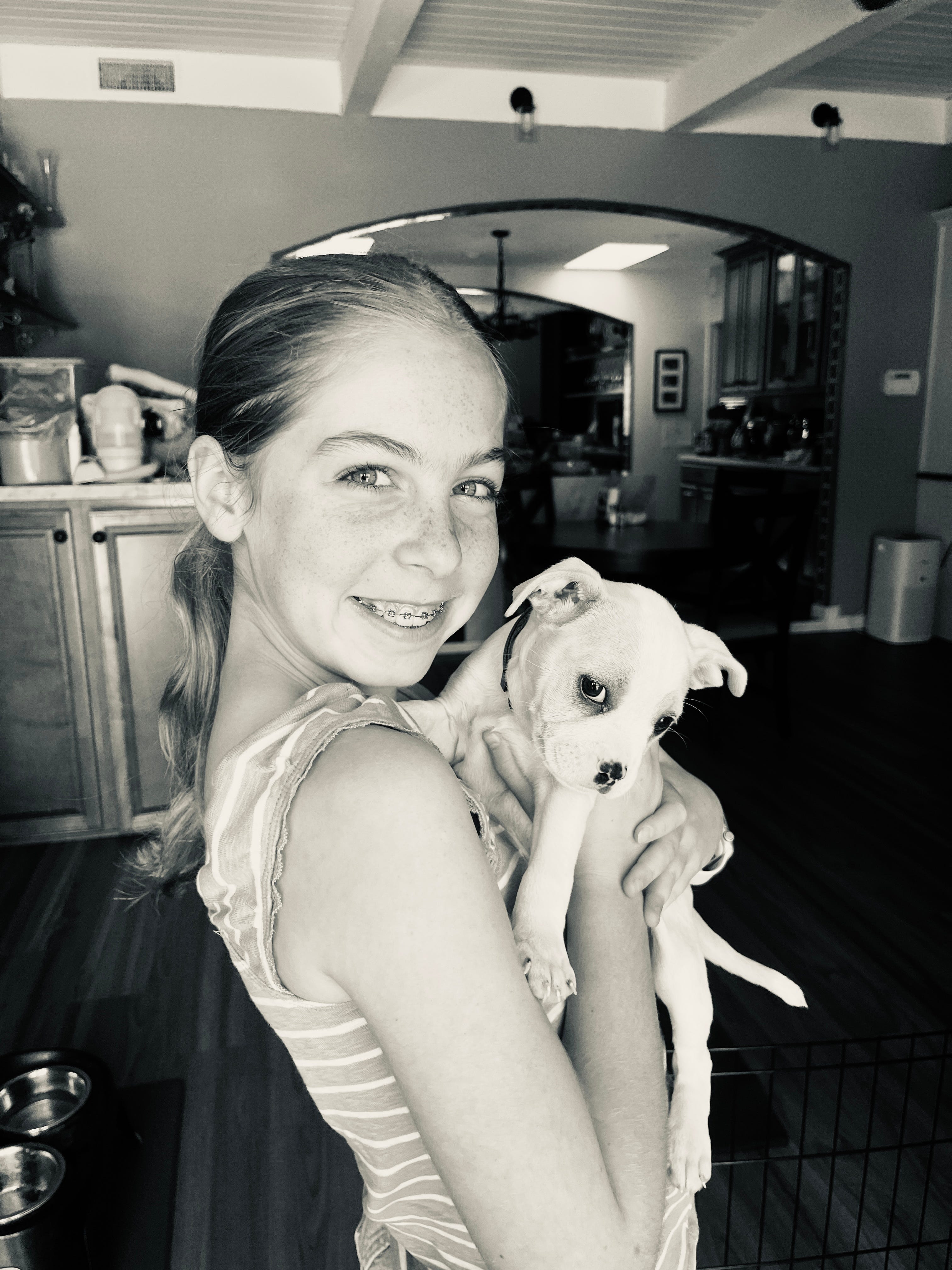
My animal-loving daughter. Note, the pictured puppy is not ours! 😅